
In This Article
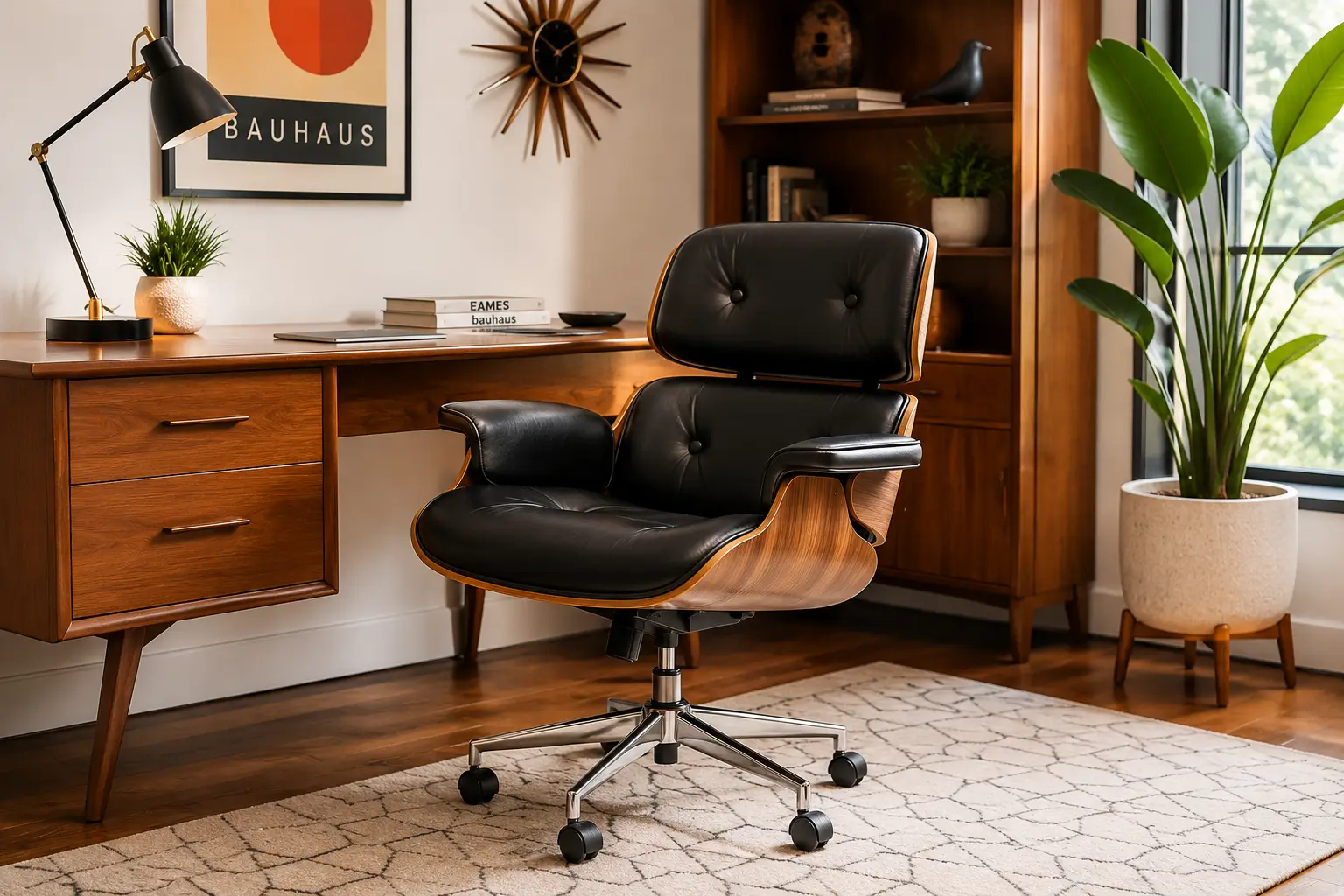
If your home office still has a black mesh task chair rolling around under a desk that deserves better, you’re not alone — and you’re also not stuck with it. mid century modern office chairs have become one of the fastest-growing categories in home furnishings, and for good reason: they bring the tapered legs, bentwood curves, and warm walnut tones of 1950s and 60s design into a piece of furniture you actually sit in eight hours a day. Unlike a purely decorative accent chair, a genuinely well-built desk chair in this style has to do double duty — look good on a video call and hold up to daily swivel-and-recline abuse.
That’s the tension this guide is built to resolve. Plenty of “mid-century” chairs on the market are style-first and comfort-second, with thin foam, wobbly bentwood joints, or casters that squeal within a month. Others get the ergonomics right but lose the design language that made you want a mid-century chair in the first place. Below, we’ve researched seven real, currently available options — spanning budget bentwood chairs under $150 to a premium aluminum-group management chair — and broken down what the spec sheets and aggregated customer feedback actually say about each one.
We’ll also cover how to choose intelligently, what mistakes to avoid, how these chairs compare to standard ergonomic task chairs, and what to expect once one is sitting in your home office. This guide contains affiliate links, and as an Amazon Associate we may earn from qualifying purchases at no extra cost to you.
What Are Mid Century Modern Office Chairs?
Mid century modern office chairs are desk seating designed in the aesthetic language of the mid-century modern design movement — roughly 1945 to 1969 — characterized by tapered wood or bentwood frames, organic curves, tufted or channel-stitched upholstery, and a mix of natural materials like walnut and teak with leather or performance fabric. Today’s versions add modern conveniences like gas-lift height adjustment, 360-degree swivel bases, and rolling casters that the original designers never had to think about.
The category sits at an interesting crossroads of furniture design: it borrows visual cues from icons like the Eames lounge chair and Danish teak desk chairs, but it’s built and priced for everyday home-office use rather than museum display. That’s exactly why it’s exploded in popularity alongside remote and hybrid work — people want a desk chair that doesn’t look like it belongs in a call center.
Quick Comparison: Top 7 Mid Century Modern Office Chairs
| Chair | Style Highlight | Price Range | Best For |
|---|---|---|---|
| Volans Bentwood Swivel Chair | Curved bentwood frame, faux leather | Under $150 | Tight budgets, small desks |
| Vinsetto Walnut Bentwood Office Chair | Walnut-finish bentwood, faux leather | $130–$180 | First mid-century upgrade |
| SIMPLIHOME Dax Bentwood Chair | Tufted back, chrome swivel base | $220–$280 | Style-forward home offices |
| Christopher Knight Home Leander | Button-tufted back, walnut frame | $190–$250 | Best all-around value |
| Baxton Studio Biset | Walnut and white two-tone frame | $170–$230 | Design-focused entry point |
| Giantex High-Back Chair | 2D headrest, rocking backrest | $180–$240 | Longer workdays, more support |
| Replica Eames Aluminum Group Chair | Genuine leather, aluminum frame | $500–$750 | Long-term investment, daily executive use |
Looking at the table, there’s a clear split between the four bentwood-and-fabric chairs clustered under $250 and the single premium aluminum-frame pick nearly triple the price. That gap isn’t padding — it reflects real differences in frame material, warranty coverage, and how long the upholstery is likely to hold up under daily use. If you’re testing whether the aesthetic fits your space before committing more, starting in that $130–$250 range is the more sensible entry point.
💬 One click helps other shoppers make an informed choice too! 😊
Top 7 Mid Century Modern Office Chairs: Expert Analysis
1. Volans Bentwood Swivel Chair — lightest on the budget
The Volans Bentwood Swivel Chair is the most accessible entry point in this roundup, and it doesn’t cut every corner to get there. Its curved bentwood plywood frame is finished in a faux-leather upholstery over foam padding, with a chrome five-star base and smooth-rolling casters — the visual formula that defines the budget end of this category.
Key features translate into real trade-offs: the seat height adjusts via a standard gas lift, and the armless, low-profile design means it tucks under most desks without clearance issues, which matters if your home office doubles as a dining nook. What the spec sheet doesn’t emphasize is that the foam density here is noticeably thinner than the pricier picks on this list, so comfort on marathon workdays will be limited.
This is the right call for anyone furnishing a starter home office, a side desk, or a room where the chair needs to look intentional without being the budget priority. Reviews consistently report that assembly is quick — most buyers report 15–20 minutes with basic tools — and that the look reads more expensive than the price suggests, though a recurring theme in aggregated feedback is that the faux leather can show creasing after a year or so of daily use.
Pros:
- ✅ Genuinely affordable entry into the mid-century look
- ✅ Fast, tool-light assembly reported by most buyers
- ✅ Compact footprint fits small desks and tight corners
Cons:
- ❌ Thinner padding than pricier alternatives on this list
- ❌ Faux leather shows wear faster under daily use
At under $150, the Volans Bentwood Swivel Chair delivers solid value if you treat it as a style statement for light-to-moderate desk use rather than an all-day ergonomic workhorse.
2. Vinsetto Walnut Bentwood Office Chair — closest to authentic Danish styling
The Vinsetto Walnut Bentwood Office Chair leans harder into the Danish-modern silhouette than most chairs in its price bracket, with a walnut-toned bentwood frame, curved backrest, and faux-leather seat that reads closer to a genuine vintage piece than a generic “accent chair with wheels.”
Its bentwood construction is laminated rather than solid wood, which keeps the price down while still delivering the curved, organic lines the style is known for; the tradeoff is that the joints benefit from being kept away from excess humidity, since laminated bentwood is more sensitive to swelling than kiln-dried hardwood. The adjustable-height gas lift and swivel base bring it in line with any modern task chair functionally, even though the frame styling is the star here.
For anyone prioritizing looks-per-dollar, this is a smart pick — it’s aimed at buyers who want their home office to photograph well on video calls without spending premium-chair money. Aggregated review sentiment frequently highlights the walnut finish quality as punching above its price point, while a recurring complaint centers on the armrests feeling slightly low for taller users.
Pros:
- ✅ Walnut bentwood finish looks notably premium for the price
- ✅ Curved backrest offers decent lower-back contact
- ✅ Swivel and height adjustment match standard task chairs
Cons:
- ❌ Armrest height runs low for users over 6 feet
- ❌ Laminated bentwood needs a dry environment to stay tight
Priced between $130 and $180, the Vinsetto Walnut Bentwood Office Chair is one of the strongest value plays here if authentic Danish-inspired styling is your top priority.
3. SIMPLIHOME Dax Bentwood Office Chair — most tailored upholstery detail
The SIMPLIHOME Dax Bentwood Office Chair stands out with a tufted, button-detailed backrest that gives it a more “designer showroom” look than the plainer bentwood chairs at lower price points, paired with a bentwood-and-chrome swivel base.
The tufted back isn’t purely decorative — the extra stitching adds structure to the foam, which in practice means less sagging over time compared to smooth-panel upholstery of similar density. Its 22-inch width and vegan faux-leather upholstery are aimed squarely at buyers who want the chair to function as a statement piece in a visible home office, not just a functional seat tucked out of sight.
This is a strong option for people whose home office is also a Zoom backdrop — real estate agents, consultants, and creators who are on camera regularly will get more mileage out of the visual upgrade than someone whose desk is in a closed room. Reviewers commonly note the seat is on the firmer side initially, softening in with a few weeks of regular use, and that the chrome base holds up well against scuffs compared to painted alternatives.
Pros:
- ✅ Tufted backrest resists sagging better than plain foam panels
- ✅ Chrome base resists scuffing better than painted metal
- ✅ Reads as a genuine design piece, not just a desk chair
Cons:
- ❌ Seat firmness takes a break-in period to soften
- ❌ Narrower weight capacity than the sturdier picks on this list
In the $220–$280 range, the SIMPLIHOME Dax Bentwood Office Chair is best suited to home offices where appearance carries real weight in the buying decision.
4. Christopher Knight Home Leander — best all-around value
The Christopher Knight Home Leander is arguably the most recognized name in this category, and the button-tufted backrest paired with a solid walnut-toned frame explains why it shows up on so many “best mid-century office chair” shortlists.
Its frame uses a sturdier wood composite than the pure-bentwood competitors here, which translates to a higher stated weight capacity and less flex when leaning back — something reviewers frequently mention as a differentiator versus cheaper bentwood alternatives. The tufted button back distributes pressure more evenly across a wider area of your upper back than a smooth panel would, which matters if you’re the type to lean back frequently between tasks rather than sitting bolt upright all day.
Christopher Knight Home has built a reputation on mid-tier furniture with dependable customer service, and that brand consistency is part of what you’re paying for here — not just the chair itself. Aggregated customer sentiment is broadly positive on comfort and looks, with a recurring caution that the casters are better suited to hard flooring than thick carpet, where they can feel sluggish.
Pros:
- ✅ Sturdier frame than bentwood-only competitors
- ✅ Tufted back distributes pressure more evenly
- ✅ Strong brand reputation for support and consistency
Cons:
- ❌ Casters underperform on thick carpet
- ❌ Available color options are more limited than newer entrants
Typically priced between $190 and $250, the Christopher Knight Home Leander earns its reputation as the safest all-around pick if you want one chair that balances style, sturdiness, and price.
5. Baxton Studio Biset — most distinctive two-tone frame
The Baxton Studio Biset differentiates itself with a walnut-and-white two-tone frame that leans into a more Scandinavian, gallery-white aesthetic rather than the all-walnut look shared by most of this list.
Baxton Studio is known primarily as a contract and hospitality furniture brand, and that design pedigree shows in the Biset’s proportions — the seat depth and backrest curve are noticeably closer to genuine mid-century lounge seating than to a generic office chair with a wood veneer bolted on. The white accent panels do mean visible scuffing shows more easily than on all-dark frames, which is worth weighing if your home office sees heavy daily traffic.
This chair is best suited to buyers decorating a specific aesthetic — a light, airy home office rather than a moody, dark-wood study — where the two-tone contrast actually enhances the room instead of competing with darker furniture. Review feedback commonly praises the distinctive look and notes the seat padding is on the firmer side, which some buyers add a cushion to soften for longer sessions.
Pros:
- ✅ Two-tone frame stands out from typical all-walnut competitors
- ✅ Proportions closer to genuine mid-century lounge seating
- ✅ Backed by a brand with hospitality-furniture design experience
Cons:
- ❌ White accents show scuffs more visibly over time
- ❌ Firmer seat padding may need a supplemental cushion
At $170–$230, the Baxton Studio Biset rewards buyers building around a specific light-and-airy design scheme rather than a generic home office refresh.
6. Giantex High-Back Chair — most built-in ergonomic support
The Giantex High-Back Chair breaks from the bentwood-and-low-back formula with a taller silhouette, a 2D adjustable headrest, and a rocking backrest function — features borrowed more from ergonomic task chairs than from traditional mid-century design.
That hybrid approach means you get more built-in adjustability than anything else on this list: the headrest can be raised, lowered, and angled to support your neck specifically, while the rocking backrest lets you recline for a break without leaving your desk. The tradeoff for that functionality is a slightly less pure design silhouette — the high back and headrest bracket read a bit more “modern office” than “1960s design icon,” a compromise worth knowing about upfront.
For anyone who spends genuinely long stretches at their desk and has neck or upper-back tension by the afternoon, this is the pick on this list built to actually address that, rather than one that just looks the part. Reviewers frequently cite the headrest adjustability as the standout feature, with a common note that the fabric upholstery, while breathable, isn’t as premium-feeling as the faux leather options nearby in price.
Pros:
- ✅ Adjustable 2D headrest supports neck during long sessions
- ✅ Rocking backrest allows recline breaks without standing
- ✅ Taller back offers more upper-back coverage than low-back rivals
Cons:
- ❌ Silhouette leans more “ergonomic office” than pure mid-century
- ❌ Fabric feels less premium than faux leather alternatives nearby in price
Priced around $180–$240, the Giantex High-Back Chair is the strongest choice here for buyers prioritizing daily comfort over strict design purity.
7. Replica Eames Aluminum Group Chair — the long-term investment piece
The Replica Eames Aluminum Group Chair is the premium anchor of this list, built as a homage to the iconic Eames Aluminum Group and Soft Pad management chairs originally designed by Charles and Ray Eames — arguably the most recognizable silhouette in the entire mid-century modern furniture canon.
It’s constructed with a die-cast aluminum frame and genuine leather soft-pad cushioning rather than the faux leather or fabric used across the rest of this list, and that material shift changes the ownership calculus entirely: genuine leather develops a patina rather than cracking or peeling the way faux leather eventually does, and cast aluminum doesn’t suffer the joint fatigue that laminated bentwood can over years of use. This is the one chair here designed and priced to be a decade-plus purchase rather than a style refresh.
It’s the clear pick for a home office that functions as an actual executive workspace — someone running client calls daily, working from home permanently, or simply someone who’s decided to buy the real design language once rather than a budget interpretation of it repeatedly. Aggregated feedback on genuine-leather Aluminum Group-style chairs is generally strong on comfort and durability, with the honest caveat that “replica” designs vary meaningfully in build quality by manufacturer, so verifying the specific listing’s materials before buying matters more here than with any other pick on this list.
Pros:
- ✅ Genuine leather ages better than faux leather over years of use
- ✅ Aluminum frame avoids the joint fatigue of laminated wood
- ✅ Design closest to the actual mid-century furniture canon
Cons:
- ❌ Meaningfully higher price than every other option here
- ❌ Build quality varies by manufacturer on “replica” listings
At roughly $500 to $750, the Replica Eames Aluminum Group Chair only makes sense if you’re buying for the long haul — but for that use case, it’s the most defensible investment on this list.
How to Choose Mid Century Modern Office Chairs
Picking the right chair in this category comes down to weighing style against daily function, since — as the seven picks above show — you rarely get the absolute maximum of both at once. Here’s the decision framework worth working through:
- Set your real budget range first. Anything under $150 will prioritize looks over long-term comfort; $200–$280 is the sweet spot for balancing both; $500+ enters genuine-material investment-chair territory.
- Measure your desk clearance. Bentwood arms and wider frames can add several inches versus a mesh task chair — check armrest width against your desk’s underside clearance before buying.
- Decide how many hours you’ll actually sit in it daily. Under 4 hours, style-forward picks like the Vinsetto Walnut Bentwood Office Chair are fine; over 6 hours, lean toward built-in support like the Giantex High-Back Chair.
- Check your flooring type. Hard flooring works with any caster style here; thick carpet performs better with upgraded casters, which is worth noting on chairs like the Christopher Knight Home Leander.
- Match material to your climate. Laminated bentwood frames are more humidity-sensitive than solid wood or aluminum — a real consideration in especially humid regions.
- Weigh faux leather versus fabric versus genuine leather. Faux leather looks premium initially but shows wear fastest; fabric breathes better; genuine leather, as on the Replica Eames Aluminum Group Chair, ages the most gracefully.
- Confirm the weight capacity against your own needs — bentwood-only frames typically rate lower than composite or aluminum frames.
Setting Up and Breaking In Your New Chair
Most mid-century office chairs arrive partially disassembled, and how you handle that first hour affects the chair’s lifespan more than people expect. Start by laying out every bolt and bracket before assembly — bentwood frames in particular are prone to hairline stress if a joint is over-tightened during setup, so hand-tighten first and only fully torque bolts once the frame is square.
Once assembled, resist the urge to max out the seat height on day one. Set it so your feet rest flat and your knees sit roughly level with your hips — a baseline the Mayo Clinic’s office ergonomics guide recommends regardless of chair style, and one that applies just as much to a bentwood mid-century chair as to a mesh ergonomic one. Faux leather and genuine leather both benefit from a proper break-in period — expect the seat cushion to soften noticeably over the first two to three weeks of regular use as the foam settles.
For the first 30 days, avoid rolling the chair aggressively across thresholds or uneven flooring transitions, since casters on lighter bentwood frames are more prone to bracket stress early on than after the frame has fully settled. A light furniture-safe wood polish on any exposed walnut or bentwood every month or two keeps the finish from drying out, especially in centrally heated homes during winter.
Real-World Scenarios: Which Chair Fits Your Workday
The hybrid commuter: If you’re in the office three days a week and home two, you don’t need premium materials taking daily wear — the Volans Bentwood Swivel Chair or Vinsetto Walnut Bentwood Office Chair covers the style upgrade without overspending on a chair that isn’t your primary seat.
The full-time remote professional: Working from home 40+ hours a week justifies spending more on comfort and durability. The Christopher Knight Home Leander or Giantex High-Back Chair make sense here — both are built to withstand daily use better than the entry-level bentwood picks.
The client-facing consultant or executive: If your desk is where you close deals over video calls, both the visual impression and the multi-year durability matter. The Replica Eames Aluminum Group Chair is the deliberate choice here — it signals a level of intention that budget chairs simply don’t, and the genuine leather holds up under daily use in a way faux leather can’t match.
The design-conscious minimalist: If your home office follows a specific light, Scandinavian-leaning palette, the Baxton Studio Biset‘s two-tone frame will integrate better than the darker walnut options, even if it means a slightly firmer seat.
Common Problems With These Chairs (and How to Fix Them)
Even well-reviewed mid-century chairs run into a handful of recurring issues, based on aggregated customer feedback across this category:
Squeaky or sticking casters. This is the single most common complaint across bentwood chairs in this price range. A drop of silicone-based lubricant (never petroleum oil, which attracts dust) on the caster axle usually resolves it within a day.
Wobbly bentwood joints after a few months. Laminated bentwood can loosen slightly as it settles. Most chairs, including the Vinsetto Walnut Bentwood Office Chair, use standard hex bolts at stress points — a quarterly check-and-tighten prevents this from becoming structural.
Seat height drifting down over time. This points to a failing gas cylinder, typically covered under the manufacturer’s warranty in the first year; check your specific listing’s warranty terms before the coverage window closes.
Faux leather creasing or peeling. Common on budget picks like the Volans Bentwood Swivel Chair after 12–18 months. A leather-safe conditioner applied every few months slows this considerably, though it won’t prevent it indefinitely on faux materials.
Armrests sitting too low for taller users. A frequent complaint on the Vinsetto Walnut Bentwood Office Chair specifically — an aftermarket gel armrest pad can add roughly an inch of usable height as a workaround.
Common Mistakes to Avoid When Buying
Buyers new to this category tend to make a handful of predictable errors. First, prioritizing photos over specs — a chair can look stunning in a listing image and still have a seat depth too shallow for anyone over 5’10”, so always check the actual dimensions rather than judging by the thumbnail. Second, ignoring weight capacity, since bentwood-only frames often carry lower ratings than composite or metal frames, and this detail is easy to miss buried in the specifications tab.
Third, underestimating assembly complexity — bentwood joints are less forgiving of assembly mistakes than a standard task chair, and over-tightening during setup is a leading cause of early frame failure. Fourth, buying the cheapest option for a role it can’t handle, like using a lightweight budget bentwood chair for a 9-to-5 job that demands eight hours of daily sitting; that’s a mismatch that shows up in comfort complaints within weeks. Finally, skipping the return window check — because mid-century chairs ship semi-assembled, some retailers apply stricter return conditions once a chair has been built, so confirm the policy before you start turning bolts.
Mid Century Modern Office Chairs vs Standard Ergonomic Task Chairs
The comparison buyers actually care about is whether they’re sacrificing function for form by choosing a design-forward chair over a mesh ergonomic one.
| Criteria | Mid Century Modern Chairs | Standard Ergonomic Task Chairs |
|---|---|---|
| Visual design | Curved wood, tufted upholstery, warm tones | Mesh, plastic, utilitarian |
| Adjustability | Basic (height, swivel, sometimes recline) | Extensive (lumbar, armrests, tilt tension) |
| Long-session comfort | Good to moderate, chair-dependent | Generally stronger, purpose-built |
| Material longevity | Varies widely by frame material | Consistent across most price points |
| Best fit | Home offices, style-conscious spaces | High-hour corporate and clinical use |
The honest read here is that dedicated ergonomic task chairs still win on raw adjustability — features like independent lumbar depth and adjustable tilt tension are rarely built into mid-century designs, mid-century chairs included. What mid-century options offer instead is a piece of furniture that fits into a living space rather than looking clinical, which is precisely why the OSHA computer workstation guidelines emphasize proper seat height and support rather than any specific chair category — the ergonomic fundamentals matter more than the aesthetic wrapper.
✨ Don’t miss these exclusive deals! 🔍 Take your home office to the next level with this carefully curated lineup. Click a highlighted item to check current pricing and availability. These picks will help you get a workspace the whole family will admire!
What to Expect: Everyday Performance
On paper, most of these chairs look similar — swivel base, gas-lift height, tapered or bentwood frame. In daily use, the differences show up in specific moments. Leaning back to think through a problem reveals whether a backrest actually flexes (the Giantex High-Back Chair‘s rocking function) or stays rigid (most of the bentwood-only picks). Reaching for a document on the floor tests whether the armrests get in the way, a common friction point on lower-set bentwood arms like those on the Vinsetto Walnut Bentwood Office Chair.
Temperature matters more than people expect, too — faux leather and genuine leather both run warmer than fabric across a full afternoon, which is worth factoring in if your home office isn’t air-conditioned. Fabric options, including the upholstery on the Giantex High-Back Chair, breathe noticeably better across long sessions.
Over months rather than days, the biggest differentiator is frame material fatigue. Composite and aluminum frames, like those on the Christopher Knight Home Leander and Replica Eames Aluminum Group Chair, show far less flex-related wear after a year of daily use than pure laminated bentwood. None of this shows up in a five-minute showroom sit-test, which is exactly why aggregated long-term review data matters more than first impressions when comparing chairs in this category.
Features That Actually Matter (and Ones That Don’t)
It’s easy to get pulled in by marketing language on a listing page, so it’s worth separating what genuinely affects daily comfort from what’s mostly cosmetic copy. Adjustable seat height matters — every chair on this list has it, and it should be non-negotiable regardless of which one you choose. Frame material matters more than most buyers initially weigh it, since it’s the single biggest predictor of how the chair holds up past year two, as covered above in the everyday performance breakdown.
What matters less than the marketing suggests: exact caster count or wheel material, since nearly all casters in this category perform similarly on hard flooring regardless of the specific plastic or rubber blend used. “Ergonomic” as a standalone marketing word is also close to meaningless without specifics — a chair described as ergonomic with no adjustable lumbar support or headrest, like most of the pure bentwood picks here, is really just a comfortable chair, not a clinically supportive one.
Genuinely useful but often overlooked: a wider base diameter, which meaningfully reduces tip risk during recline, and tool-free height adjustment, which sounds minor until you’re the third person in your household to use the chair that day. Prioritize these functional details over finish-color options or minor stitching variations when two chairs are otherwise close in price.
Long-Term Cost and Maintenance
The sticker price is only part of the real cost of owning a chair for years rather than months. Here’s how the tiers break down:
| Tier | Upfront Price | Typical Lifespan | Likely Added Costs |
|---|---|---|---|
| Budget bentwood (e.g., Volans Bentwood Swivel Chair) | Under $150 | 1–3 years | Replacement casters, seat cushion |
| Mid-range (e.g., Christopher Knight Home Leander) | $190–$280 | 3–6 years | Occasional bolt tightening, minor upholstery care |
| Premium (Replica Eames Aluminum Group Chair) | $500–$750 | 8–15+ years | Leather conditioner, minimal else |
Run the math over a five-year horizon and the premium option often isn’t as expensive as it looks upfront: replacing a $130 budget chair twice over five years lands close to the cost of one durable mid-range pick, without accounting for the hassle of reassembly and disposal each time. That said, if your working situation might change in the next year or two — a new job, a move, a shift back to a corporate office — the lower upfront commitment of the budget and mid-range tiers is the more sensible bet.
Safety, Regulations, and Standards
Office chair durability and safety in the U.S. commercial furniture market are generally measured against ANSI/BIFMA X5.1 standards, which test general-purpose office chairs for load capacity, stability, and structural durability under repeated stress. Not every furniture brand explicitly certifies its home-market chairs against this standard, so it’s worth checking a specific product’s documentation if certified durability testing matters to your buying decision — particularly for the higher-investment picks on this list.
Stability is also a practical safety issue at the consumer level: a swivel chair with a narrow five-point base, especially on a lighter bentwood frame, carries a higher tip risk than a wider aluminum base when someone leans back at an angle rather than straight on. This is worth factoring in if the chair will be used by anyone still developing balance awareness, such as a younger family member doing homework at a shared desk. Weight capacity ratings exist for a real structural reason, not as a formality — exceeding them regularly accelerates frame fatigue well beyond the expected lifespan noted in the cost table above.
FAQs
❓ What is the difference between mid century modern office chairs and traditional desk chairs?
❓ Are mid century modern office chairs comfortable for full workdays?
❓ How much should I expect to pay for a quality mid century modern office chair?
❓ Is faux leather or fabric better for a mid century modern office chair?
❓ Can a mid century modern office chair work with a standing desk?
Conclusion
The right mid century modern office chair depends less on which one is objectively “best” and more on matching the chair to how you actually work. If you’re testing the aesthetic on a budget, the Volans Bentwood Swivel Chair or Vinsetto Walnut Bentwood Office Chair gets you there without much risk. If you want the safest all-around balance of style, sturdiness, and price, the Christopher Knight Home Leander remains the strongest general recommendation on this list. Anyone logging long daily hours should lean toward the Giantex High-Back Chair‘s added support, while a design-focused Scandinavian space fits the Baxton Studio Biset better than an all-walnut frame would.
And for anyone ready to buy the real design language once rather than a budget interpretation repeatedly, the Replica Eames Aluminum Group Chair is a genuinely defensible long-term investment — the kind of purchase that’s still earning its keep a decade from now. Whichever tier fits your budget and workday, the research above should make the decision a matter of fit, not guesswork.
Recommended for You
- Height Adjustable Corner Desk: 7 Best Picks for 2026
- Laptop Monitor Mount: 7 Best Picks for an Ergonomic Desk in 2026
- Desk With Hidden Monitor Lift: 7 Best Options to Try in 2026
Disclaimer: This post contains affiliate links. As an Amazon Associate, I earn from qualifying purchases made through these links, at no additional cost to you.
✨ Found this article helpful? Share it with someone who needs it! 💬🤗