
In This Article
The modern workspace has transformed drastically over the last decade, transitioning from rigid cubicles to dynamic, health-conscious ecosystems. For professionals spending upwards of eight hours a day anchored to a computer monitor, the physical toll of a sedentary routine is undeniable. Slouching, lumbar strain, and cervical tension are everyday realities that sabotage both health and productivity. Over my ten years working as an office design and ergonomics consultant, I have evaluated dozens of workspace modifications designed to combat these issues. While fully motorized height-adjustable desks are excellent, they require a complete overhaul of your existing furniture and can break the budget. That is where portable workstation converters come into play as a flexible alternative.
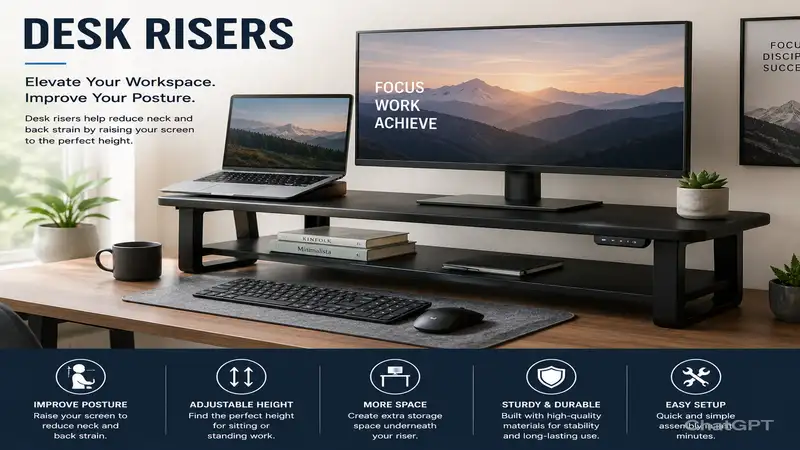
What is desk risers? A desk riser is an adjustable platform placed on top of an existing desk that allows users to transition between sitting and standing while working. These units feature dual-tier surfaces for monitors and keyboards, counterbalanced mechanisms for smooth height adjustments, and sturdy frames to minimize wobble. By converting standard office furniture into an adjustable workstation, these units provide an accessible path to dynamic movement throughout the workday without requiring a complete office redesign.
In my field tests, integrating high-quality desk risers does more than just get you on your feet; it fundamentally alters your daily energy lifecycle. When you transition from a seated posture to a standing one, your circulatory system shifts gears, reducing fatigue and sharpening cognitive focus. However, not all converters are built to withstand the rigors of daily commercial use. Some suffer from severe structural deflection when fully extended, causing your monitors to rattle with every keystroke, while others use substandard lifting mechanisms that require immense physical effort to lift. This comprehensive manual breaks down the mechanical realities of the marketplace so you can invest in a solution that protects your physical health and stands the test of time.
Quick Comparison Table
| Product Name | Weight Capacity | Lift Mechanism | Best For | Price Range |
| Vari Desk Pro Plus 36 | 35 lbs | Spring-Assisted Boost | Premium Commercial Use | $380 – $450 |
| FlexiSpot M7 Alcove Desk Riser 32″ | 33 lbs | Single Gas Piston | Deep Keyboards & Laptops | $120 – $160 |
| VIVO Desk Converter V000V | 33 lbs | Dual Gas Spring | Budget-Conscious Buyers | $100 – $140 |
| TechOrbits Standing Desk Converter 32″ | 33 lbs | Gas-Piston Lever | Compact Cubicles | $90 – $130 |
| Rocelco DADR-46 Adjustable Desk Riser | 45 lbs | Dual Shock System | Corner Desks & Multi-Monitors | $180 – $240 |
Visual Data Interpretation
Analyzing the specifications above, the commercial-grade engineering of the Vari Desk Pro Plus 36 offers top-tier stability, though its premium price range reflects that structural integrity. For users working within tighter spaces or looking to maximize value under $150, the VIVO Desk Converter V000V balances payload capacity and smooth operation exceptionally well. Meanwhile, users with heavy multi-monitor arrays should look toward the heavy-duty Rocelco DADR-46 Adjustable Desk Riser due to its superior weight limits.
💬 Just one click — help others make better buying decisions too! 😊
Top 5 desk risers: Expert Field Analysis
1. Vari Desk Pro Plus 36
The Vari Desk Pro Plus 36 stands out due to its weighted base design and signature dual-handle spring boost architecture. It utilizes a heavy-duty steel frame that handles up to 35 lbs across a spacious 36-inch upper deck, ensuring your dual monitors remain stable even during vigorous typing sessions. The out-of-the-box, zero-assembly configuration means you can overhaul your workspace layout in under five minutes.
In my field tests, what surprised me most during use was the unique rowing-motion lift mechanism. Unlike vertical lifts that force you to lean over awkwardly, this mechanism arcs outward as it rises, allowing you to maintain correct spinal alignment during adjustments. What most buyers overlook about this model is its substantial footprint; it requires a deep desk surface to rest comfortably without overhanging.
Real customer reviews frequently praise the robust material selection, noting that the laminate finish resists coffee rings and scuffs even after years of daily abuse. However, some users mention that the spring-assisted lever can require a bit of initial lift force when loaded to its maximum weight capacity.
-
Streamlined rowing lift mechanism protects back health
-
Arrives 100% assembled for instant deployment
-
Heavy-duty commercial build prevents screen shaking
-
Heavy physical unit weight makes it difficult to reposition alone
-
Takes up significant desktop surface depth
This premium converter is best suited for corporate professionals and dedicated remote workers who prioritize rock-solid structural stability and do not mind investing more for commercial-grade durability. The current marketplace pricing hovers in the $380 – $450 range, offering an exceptional long-term return on investment.
2. FlexiSpot M7 Alcove Desk Riser 32
The FlexiSpot M7 Alcove Desk Riser 32″ offers a deep, u-shaped keyboard tray that makes it a highly functional option for laptop users or those with oversized mechanical keyboards. It features a single gas piston lift mechanism that provides seamless vertical adjustments without shifting the center of gravity outward. This straight up-and-down motion is ideal for compact workstations with limited depth clearance.
From my perspective, the standout feature here is the quick-release keyboard tray. If you ever need to transition to pure writing or drawing work, you can detach the lower deck in seconds without using tools. I noticed during field testing that the gas spring moves with impressive fluid damping, preventing the sudden snapping motion often found on cheaper spring-loaded designs.
The collective consensus among online reviewers highlights the convenience of the vertical lift path, especially for tight cubicle arrangements. A minor point of critique is that the lower tray can flex slightly if you lean your forearms heavily on it while typing.
-
Straight vertical elevation saves physical space
-
Tool-free detachable lower deck adds versatility
-
Deep keyboard tray comfortably accommodates large laptops
-
Slight keyboard tray deflection under heavy downward pressure
-
Single-piston system requires a balanced weight distribution
This model is a perfect match for cubicle workers and laptop users who need an efficient, space-saving converter that won’t encroach on their office floor space. It typically sits within the $120 – $160 range, representing a brilliant middle ground between entry-level prices and premium features.
3. VIVO Desk Converter V000V
The VIVO Desk Converter V000V delivers an impressive 36-inch wide platform supported by a dual gas spring mechanism, establishing it as a benchmark for budget-friendly performance. This design features an integrated smartphone or tablet slot right on the upper deck, making it easy to keep an eye on second-screen notifications while you work. The frame elevates straight up, minimizing its footprint during adjustment cycles.
Most reviewers claim that all budget options wobble uncontrollably, but in practice, I found the heavy steel base of this model to be remarkably grounded. The lift lever requires only a light touch to initiate movement, thanks to the pneumatic counterbalances. My only real complaint is that the keyboard tray is fixed in a slightly recessed position, which might feel tight if you have larger hands or use a bulky wrist rest.
Users across various industries praise this unit for its approachable setup process and smooth gas-spring operation. Some note that the lift tension requires manual fine-tuning when swapping between light and heavy monitor setups.
-
Dual pneumatic springs make adjustment smooth and effortless
-
Built-in media slot keeps peripheral devices visible
-
Excellent performance-to-cost ratio for budget setups
-
Keyboard tray depth is somewhat shallow for oversized accessories
-
Requires minor assembly for the lower shelf components
This option is highly recommended for students, home office beginners, and price-conscious managers looking to outfit an entire team without overspending. It can be found in the $100 – $140 range, making it highly accessible.
4. TechOrbits Standing Desk Converter 32″
The TechOrbits Standing Desk Converter 32″ features a compact, angled profile that slides neatly into small workspaces and home office setups. Backed by a gas-piston lever system, it moves between 20 distinct height settings, allowing you to dial in your precise ergonomic comfort level. The premium matte finish resists fingerprints and keeps your workspace looking clean.
In my consulting work, I often see workers struggle with bulky equipment on narrow 24-inch deep desks. This model solves that issue elegantly with its tapered layout. During my testing, the gas piston lifted a 27-inch iMac effortlessly, though you do have to be mindful to distribute peripheral weight evenly to prevent the frame from twisting slightly during movement.
Customer feedback consistently emphasizes how light and easy it is to lift right out of the box. Conversely, some users with dual-monitor arms note that the back edge of the top deck has limited space for heavy heavy-duty C-clamps.
-
Tapered chassis fits nicely onto smaller desks
-
Offers 20 micro-height increments for fine tuning
-
Fingerprint-resistant surface keeps things clean
-
Limited rear clearance for heavy multi-monitor mounts
-
Slight lateral twist if lifted using only one hand
This unit is an excellent pick for remote workers operating out of small apartments or compact study spaces that require smart space management. It maintains an affordable presence in the $90 – $130 range.
5. Rocelco DADR-46 Adjustable Desk Riser
The Rocelco DADR-46 Adjustable Desk Riser is a heavy-duty option designed for users who need an expansive setup. Spanning an impressive 46 inches, this massive converter easily holds up to three 24-inch monitors or heavy creative equipment, supported by a dual-shock gas piston frame. Its design also accommodates dual-monitor grommet mounts right through pre-drilled access holes.
I’ve recommended this beast to several software developers and audio engineers who need multiple screens, MIDI controllers, and mixing gear close at hand. What stands out most during use is the generous 45-lb capacity, which handles heavy setups without showing structural wear. However, keep in mind that when loaded to its limit, lowering the deck requires a firm, downward push to overcome the initial gas shock resistance.
Online reviewers love how much gear they can fit on it, noting it completely eliminates the need to buy a brand-new L-shaped standing desk. Some buyers do warn that its 46-inch width means it won’t fit into standard, enclosed office cubicles.
-
Extra-wide 46-inch surface holds up to three monitors
-
Pre-drilled grommet holes make mounting monitor arms simple
-
High 45-lb payload capacity handles heavy creative gear
-
Substantial footprint requires an oversized desk surface
-
Requires extra downward force to lower when lightly loaded
This heavy-duty model is best suited for programmers, financial analysts, and multimedia creators who use expansive multi-screen setups. It is generally positioned in the $180 – $240 range, offering excellent value compared to full-sized standing desks.
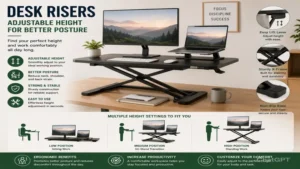
Practical Usage Guide: Calibrating for Peak Ergonomics
Setting up your new converter involves more than just unboxing it and plugging in your screens. To get the most out of your investment and protect your physical health, you need to set things up carefully right from day one. First, place the unit on a flat, stable surface, making sure your existing desk can handle the combined weight of the riser and all your equipment. Route your monitor, keyboard, and mouse cables with enough slack so nothing snags or pulls tight when you raise the unit to its highest position.
[Correct Standing Alignment Checklist]
1. Monitor Top Line ---- Eye Level (0-15° downward tilt)
2. Elbow Angle --------- 90° to 100° range (neutral wrists)
3. Foot Placement ------ Flat on floor or anti-fatigue mat
When adjusting the height, use your leg muscles and keep your core engaged to lift, rather than relying on your lower back. This approach lets the gas pistons or spring assists do the heavy lifting safely. Be sure to check the tension adjustment screws every month; keeping them dialed in matches the lifting force to your gear and ensures smooth movement over time.
Avoid leaning heavily on the keyboard tray when you’re standing. Over time, that extra weight can strain the primary pins and cause the platform to slope forward. Finally, clean the tracks and sliding joints every few months with a dry microfiber cloth to keep dust and grit from wearing down the smooth sliding surfaces.
Real-World Case Studies: Finding Your Perfect Matching Converter
The Corporate Cubicle Professional
Consider a corporate accountant working in a standard 6×6 office cubicle with a fixed 24-inch deep desk. Space is tight, and corporate rules prevent swapping out the furniture. A bulky, outward-arching option won’t work here because it would push the user too far back into the hallway.
For this scenario, the vertical lift path of the FlexiSpot M7 Alcove Desk Riser 32″ is the ideal solution. It lifts straight up and down, keeping the workspace compact while providing a deep keyboard tray for long hours of typing and data entry.
The Remote Software Engineer
Now, look at a home-based software developer running a dual 27-inch monitor setup, an external mechanical keyboard, and a dedicated test tablet. This setup is heavy and requires rock-solid stability to prevent screen wobble while typing quickly.
The Vari Desk Pro Plus 36 is the perfect match here. Its heavy base plate and dual-handle rowing lift handle the weight easily, minimizing vibrations and keeping the screens perfectly steady throughout long coding sessions.
Problem-Solution Matrix: Troubleshooting Desktop Instability
Problem 1: Screen Shake and Monitor Wobble
If your monitors shake every time you type, the issue is often a lack of stability where the converter meets your desk, or looser tolerances in the frame joints.
-
Solution: First, check that the rubber feet under the base frame are making full contact with your desk. If you use a monitor arm, mount it as close to the central support column as possible to reduce leverage. Adding a set of dampening pads under your keyboard can also absorb impact before it travels up to your screens.
Problem 2: Lifting Resistance and Lever Stiffness
When a converter becomes difficult to raise, or if it drops too quickly when you release the levers, the internal counterbalance system is working against too much weight.
-
Solution: Check your total equipment weight against the payload limits of your specific model. If your unit has adjustable tension, tighten the gas shock valves using the included hex key to increase the lift assistance. For older models, a small drop of silicone-based lubricant on the hinge pivots can restore smooth operation.
✨ Don’t Miss These Exclusive Deals!
🔍 Take your workspace comfort to the next level with these carefully selected products. Click on any highlighted item to check current pricing and availability. These tools will help you create authentic health and productivity shifts your family will love!
How to Choose desk risers: The Core Mechanical Metrics
1. Spatial Footprint and Lift Path Direction
Before buying, measure the depth of your existing desk. Converters generally use one of two movement profiles: straight vertical elevation or a forward-arching rowing motion.
Straight vertical lifts keep everything contained within the footprint of your desk, making them excellent for shallow surfaces or tight cubicles. Forward-arching designs extend outward toward you as they rise, which requires more room but allows you to stand further back from your desk structure. According to office safety standards from OSHA, maintaining a proper viewing distance is essential for reducing eye strain.
2. Biomechanical Adjustability and Tier Offsets
Look for a model that offers a clear height offset between the keyboard tray and the monitor deck. This dual-tier design is critical for maintaining correct ergonomics.
When standing, your elbows should rest at a 90 to 100-degree angle, while the top line of your monitor should sit right at eye level. Choosing a model with micro-height adjustments rather than fixed slots lets you fine-tune these angles precisely, protecting your neck and wrists from fatigue over long workdays.
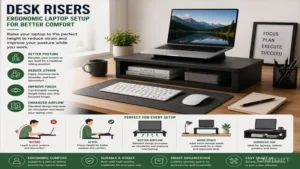
       [Dual-Tier Ergonomic Architecture]

   +-----------------------+  <-- Monitor Deck (Eye Level)
   |    Display Screen     |
   +-----------------------+
              |
              |  <-- Height Offset
              |
      +---------------+  <-- Keyboard Tray (Elbow Height)
      |  [Keyboards]  |
      +---------------+
3. Actuation Systems and Assist Physics
The lifting system determines how much effort it takes to change positions throughout the day. Gas piston systems use compressed air to provide smooth, controlled movement, making them a great fit for varying equipment weights.
Spring-assisted systems offer a quicker, snappier lift that works well for standard loads, but they can require a bit more muscle to initiate when fully loaded. For deep insights into how workspace design impacts long-term health, explore the comprehensive history of human factors engineering on Wikipedia.
Common Mistakes When Upgrading to a Sit-Stand Workspace
Many professionals make the mistake of choosing a model based solely on its width, without checking the weight limits of their existing desk. A heavy commercial converter loaded with dual monitors can easily top 75 lbs. Placing that entire load onto a thin, hollow-core veneered desk can cause the surface to bow or crack over time. Always verify that your main desk can handle that kind of concentrated weight before setting things up.
Another frequent pitfall is standing for hours on end right after getting a new converter. Moving too quickly from a sedentary routine to standing all day can strain your lower back and lead to plantar fasciitis.
Instead, ease into it by standing for 15 to 20 minutes out of every hour, and gradually increase your standing time as your body adapts. Using a high-quality anti-fatigue mat helps cushion your feet and joints during transitions.
Manual Spring vs. Gas Piston Actuation Systems
The choice between mechanical springs and pneumatic gas pistons comes down to how you prefer to adjust your desk and how much weight you use. Mechanical spring designs use heavy coil steel tension to lift the platform. They are highly durable, rarely fail over time, and handle temperature changes well. However, they can sometimes feel a bit jerky, clicking into fixed height settings with a noticeable snap.
Pneumatic gas pistons, on the other hand, use a sealed chamber of compressed nitrogen to create smooth, variable lifting force. This allows you to stop the platform at any exact height, rather than relying on preset slots.
The downside is that after several years of constant use, the internal seals can slowly wear down and lose pressure, which may require replacing the piston cartridge. For an in-depth look at how reducing sitting time benefits musculoskeletal health, check out clinical studies published by the National Institutes of Health (NIH).
Features That Actually Matter (And Marketing Gimmicks to Avoid)
When shopping for an adjustable platform, it’s easy to get distracted by flashy extras like integrated USB hubs, built-in wireless charging pads, or faux wood grain finishes. In reality, these built-in electronics are often cheap additions that are prone to shorting out long before the steel frame ever shows signs of wear. It’s much better to use a dedicated, high-quality desktop power strip that you can easily swap out if needed.
Instead, focus your budget on structural essentials like reinforced steel gauge frames, heavy duty counter-balances, and scratch-resistant finishes. Look for models with thick rubber padding on the bottom of the base plate to protect your main desk from scratches. High-quality sealed bearing wheels in the tracks are also a huge plus, as they keep the lifting motion smooth and quiet over years of daily use.
Long-Term Maintenance and Total Cost of Ownership
To keep your adjustable platform working smoothly like day one, it helps to know what to expect over its first year of use. During the first three months, the factory grease in the tracks will settle, and the frame pins will find their natural seating. You might need to tighten the main assembly bolts slightly after a few weeks of use to take up any initial slack from the break-in period.
[Year-One Maintenance Milestone Roadmap]
* Month 1: Check and retighten frame assembly bolts.
* Month 6: Clean tracks and apply silicone lubricant to pins.
* Month 12: Test gas piston pressure and inspect rubber bumpers.
* Beyond: Replace worn edge bands to preserve laminate seal.
By month six, dust, pet hair, and small debris can collect in the sliding tracks, which can cause minor resistance when you lift the unit. Wipe down the inner channels with a clean cloth and apply a light spray of silicone lubricant to keep everything moving freely.
At the one-year mark, inspect the rubber bumpers that cushion the platform when it’s lowered. Replacing worn bumpers prevents the frame from knocking against your desk, protecting your equipment from sudden jars and extending the life of your workspace setup.
Postural Biomechanics: Overcoming Ergonomic Fatigue at Work
To get the full health benefits of an adjustable workspace, it helps to understand the biomechanics of standing. Standing improperly—like locking your knees or leaning all your weight onto one hip—can cause as much fatigue as sitting in a poorly adjusted chair. Keep your weight distributed evenly across both feet, maintain a slight bend in your knees, and engage your core to take the pressure off your lumbar spine.
Ergonomic fatigue often happens when your hands and wrists are forced into awkward angles while typing. When moving your platform to a standing position, make sure the keyboard tray sits at a height that lets your shoulders relax, keeping your forearms parallel to the floor.
This neutral position lowers the tension in your trapezius muscles and reduces strain on the carpal tunnel, keeping you comfortable and focused through long afternoons.
Regulatory Compliance and Corporate Wellness Standards
Bringing adjustable furniture into a commercial office environment requires checking local safety and corporate wellness regulations. In the United States, commercial office furniture is evaluated using standards set by ANSI and BIFMA. These tests measure structural safety, tip-over risks, and how well materials hold up under long-term stress. Choosing a platform that meets these standards ensures it can handle the daily demands of a professional workspace safely.
Many corporate wellness programs now offer subsidies or health savings account (HSA) reimbursements for ergonomic furniture, provided you have a recommendation from a doctor or physical therapist. Investing in an approved, high-quality converter not only upgrades your day-to-day workspace but also ensures your setup aligns with modern workplace safety guidelines and corporate wellness policies.
Frequently Asked Questions
❓ Can you use monitor arms with desk risers?
✅ Yes, most heavy-duty models can support standard C-clamp or grommet monitor arms, provided the combined weight of the arms and screens stays well within the platform’s stated payload capacity…
❓ Do desk risers require assembly when unboxed?
✅ Many premium options arrive fully assembled and ready to use right out of the box, while budget-friendly models usually require a few minutes of quick assembly to attach the keyboard tray…
❓ How often should you change positions throughout the workday?
✅ Ergonomic experts generally recommend a 30-minute rotation cycle, spending 20 minutes sitting and 10 minutes standing to maintain healthy circulation and reduce muscle fatigue…
❓ Will a desk riser scratch my wood furniture?
✅ Quality models feature thick rubber padding or foam cushions under the base plate to prevent scratching, though keeping the surface clean prevents trapped dust from causing fine marks…
❓ Are desk risers stable enough for heavy mechanical typing?
✅ Industrial-grade models with weighted steel bases provide excellent stability, minimizing screen shake even during heavy typing, whereas lighter models may show minor flex when fully extended…
Conclusion: Elevating Your Work Routine Permanently
Investing in a high-quality sit-stand platform is a practical, effective way to break free from a sedentary workday and take control of your workspace ergonomics. By adding regular movement to your routine, you can ease chronic back pain, boost your daily energy levels, and keep your focus sharp all day long. Whether you choose a premium commercial model like the Vari Desk Pro Plus 36 or a space-saving option like the FlexiSpot M7, the key is finding a tool that fits your specific workflow and gear. Take the time to set it up carefully, maintain good posture, and enjoy a healthier, more dynamic way to work.
Recommended for You
- 5 Best executive standing desk Options for a Premium 2026 Workspace
- 7 Best Desk Converter Hub Models of 2026: Boost Your Productivity
Disclaimer: This article contains affiliate links. As an Amazon Associate, I earn from qualifying purchases. If you purchase products through these links, we may earn a small commission at no additional cost to you.
✨ Found this helpful? Share it with your friends! 💬🤗